-
-
-
- Services pour bioprocédés
- Services pour centrifugeuse et rotors
- Services pour Mastercycler
- Services pour automates de pipetage
- Services pour congélateurs
- Services pour incubateurs
- Services pour agitateurs
- Services pour appareils de photométrie
- Service de contrôle de la température et de l’agitation
- Service pour pipette
-

-
-
-
- Services pour bioprocédés
- Services pour centrifugeuse et rotors
- Services pour Mastercycler
- Services pour automates de pipetage
- Services pour congélateurs
- Services pour incubateurs
- Services pour agitateurs
- Services pour appareils de photométrie
- Service de contrôle de la température et de l’agitation
- Service pour pipette
-
-
- Toutes les centrifugeuses
- Centrifugeuses de paillasse
- Centrifugeuses au sol
- Centrifugeuses réfrigérées
- Microcentrifugeuses
- Centrifugeuses polyvalentes
- Centrifugeuses haute vitesse
- Ultracentrifugeuses
- Concentrateur
- Produits IVD
- Consommables pour centrifugeuses haute vitesse et ultracentrifugeuses
- Tubes à centrifuger
- Plaques de centrifugeuse
- Logiciel de gestion d’appareils
- Gestion des échantillons et des informations
-
- Pipettes, distributeurs et dispositifs de manipulation de liquides automatisée
- Pipettes mécaniques
- Pipettes électroniques
- Pipettes multicanaux
- Pipettes et distributeurs à déplacement positif
- Pointes de pipette
- Distributeurs sur flacon
- Auxiliaires de pipetage
- Accessoires pour pipettes et distributeurs
- Pipetage automatisé
- Consommables d’automatisation
- Accessoires d’automatisation
- Services pour pipettes et distributeurs
Vous vous apprêtez à quitter ce site.
Veuillez noter que votre panier actuel n’est pas encore enregistré et ne pourra pas être affiché sur le nouveau site ou lors de votre prochaine visite. Si vous souhaitez enregistrer votre panier, veuillez vous connecter sur votre compte.
Regarding suitability of Eppendorf bioprocess equipment in GMP-regulated applications, please reach out to your Eppendorf sales representative.
Stem Cell Bioprocessing
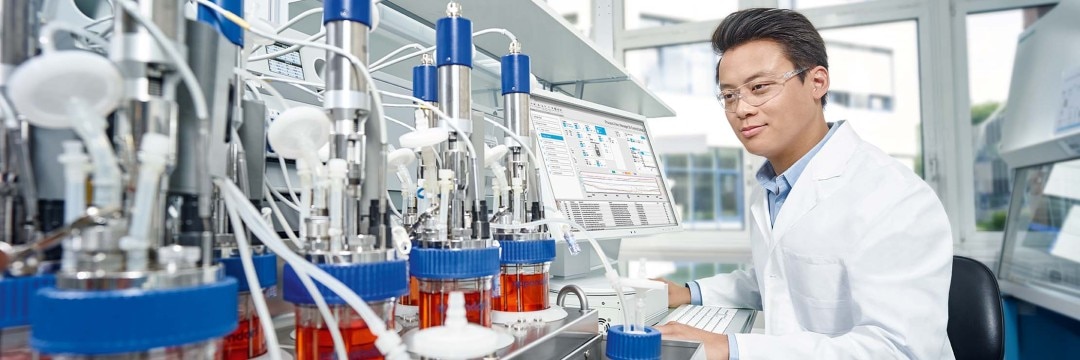
Bioreactors for stem cells
Stem cell process development
Stem cell process transfer from R&D to production
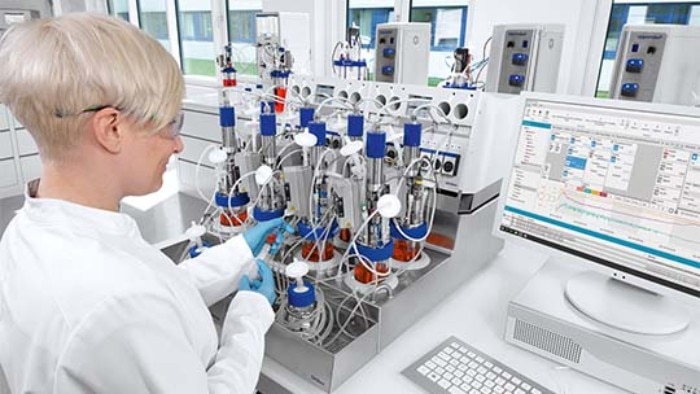
Eppendorf bioreactors for stem cells
Customer success stories
Stirred-tank bioreactors facilitate the efficient expansion of stem cells through their scalable design, the ability to tightly control key parameters, and automation. Learn more about bioreactors for stem cells and how to get started with stem cell bioprocessing.
Lire la suite
Bioreactors for stem cells
What are bioreactors?
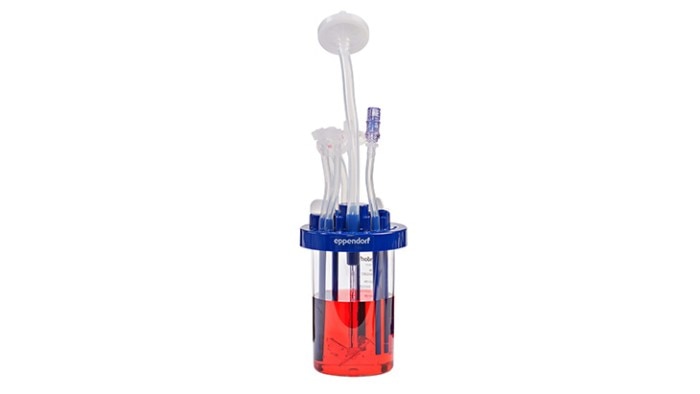
The success of stem cell bioprocessing relies on robust and reproducible culture conditions and processes. Bioreactors are vessels used to culture a broad range of cell types in precisely controlled conditions to provide optimal productivity, efficiency, and product quality. Bioreactors come in a range of sizes from milliliters to hundreds of liters. They can either be single-use or made of glass or stainless steel.
Lire la suite
What are the benefits of bioreactors for stem cell cultivation?
- Better reproducibility: In bioreactors you can monitor critical culture parameters including pH , Dissolved Oxygen (DO) , temperature and nutrient feeding and automatically adjust them by bioprocess monitoring and control software. Like this, culture conditions and as a result culture outcome can be better reproduced.
- Simpler scale-up: Many stem cell applications in cell therapy development, drug discovery, and lab-grown meat require high cell numbers. When using a bioreactor one can increase the size of the culture vessel to many liters and even more, unlike cell culture flasks where the number of vessels must be increased after a certain point. Using one big vessel instead of many small ones saves space and manual labor, thus simplifying the process of increasing the number of cultured cells.
Lire la suite
Lire la suite
How to use bioreactors for stem cell expansion?
The majority of stem cells are adherent cells and require a support matrix to grow. In 2D cultures, this means growing stem cells in dishes or flasks, however, these systems are often challenging to scale-up. Fortunately, there are many available options to grow adherent cells in bioreactors including:
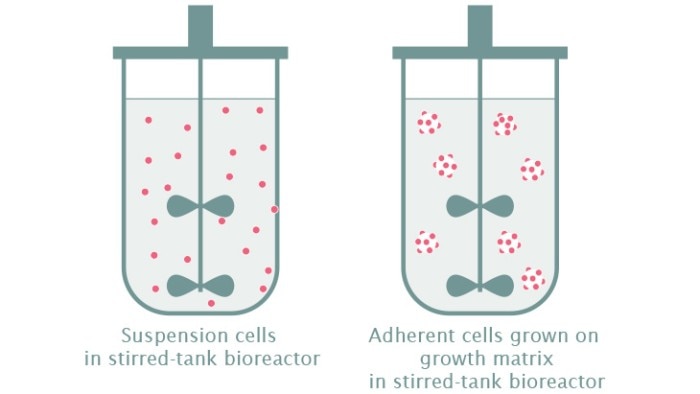
- Cell-only aggregates: This technique involves allowing cells to adhere to one another and form an aggregate. This technique is often used for the cultivation of induced pluripotent stem cells (iPSCs) in bioreactors.
- Microcarriers: Microcarriers are spherical beads, which are added to the culture medium and serve as a surface for adherent cells such as mesenchymal stem cells (MSCs) to attach and grow. Microcarriers are made of a variety of materials. They can have specific coatings to enhance cell attachment, yield and viability.
- Fibra-Cel® Disks: Disks made of polyester and polypropylene provide a growth support for adherent cells in both packed-bed bioreactors and in suspension. Due to their three-dimensionality and fibrous material, Fibra-Cel Disks allow for easy cell attachment, a high surface-to-volume-ratio, and provide a low-shear environment. This often results in increased total biomass compared to many microcarriers.
Lire la suite
Lire la suite
How to use bioreactors for stem cell differentiation?
Lire la suite

How can I switch from stem cell culture in flasks and dishes to bioreactors?
Lire la suite
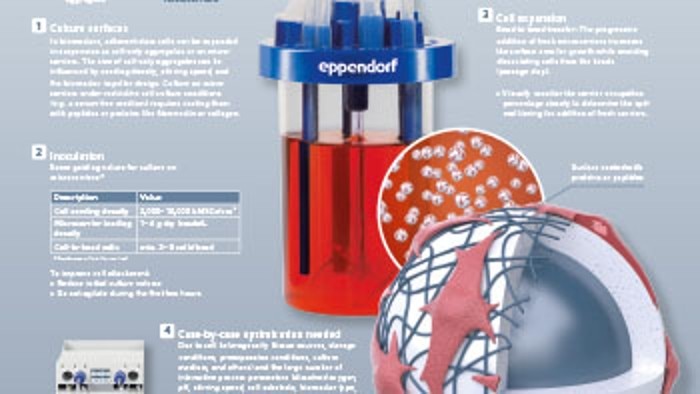
Infographic: Stem cell culture in bioreactors
Download our infographic for some tips to help you transfer your stem cell culture from dishes and flasks to bioreactors.
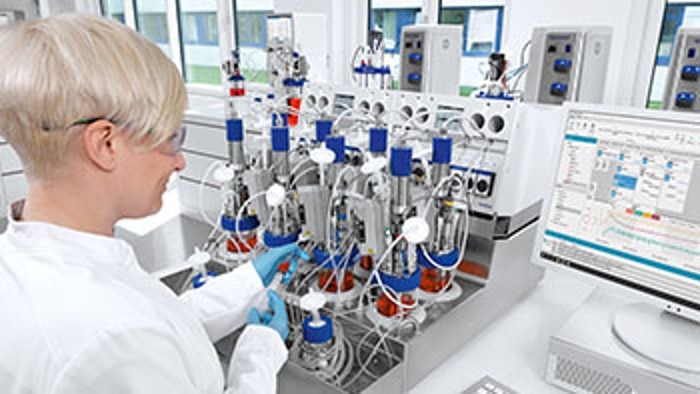
Interview: Increasing hiPSC yields
Robert Zweigerdt fromHannover Medical Schoolexplains how his groupconverted stem cell culture to bioreactors and which process optimization measures were crucial to increase the cell yield.
Panel discussion: Preparing your stem cell cultivation for commercialization
At what point in yourdevelopment should youconsider which cultivation method? How to switch from static to stirred-tank cultivation? Listen to experts from the Cell and Gene Therapy Catapult and Eppendorf to discover answers to these and more questions.

How to culture mesenchymal stem cells in bioreactors?
Lire la suite
Read our application notes for some guidelines on how to culture MSCs in bioreactors
How to culture iPSCs in bioreactors?
Lire la suite
Read our application notes for some guidelines on how to culture hiPSCs in bioreactors
Stem cell process development
How can I establish a robust, reproducible stem cell bioprocess?
How to monitor and control a bioprocess
Lire la suite
How to develop a bioprocess
Lire la suite
How can I increase the yield of my stem cell culture in bioreactors?
Find out, how the group of Robert Zweigerdt at MH Hannover increased hiPSC yield tenfold to 35 million hiPSCs per mL by optimizing process parameters and feeding strategy.
Lire la suite
How to produce stem cell-derived exosomes in bioreactors?
Lire la suite
Stem cell process transfer from R&D to production
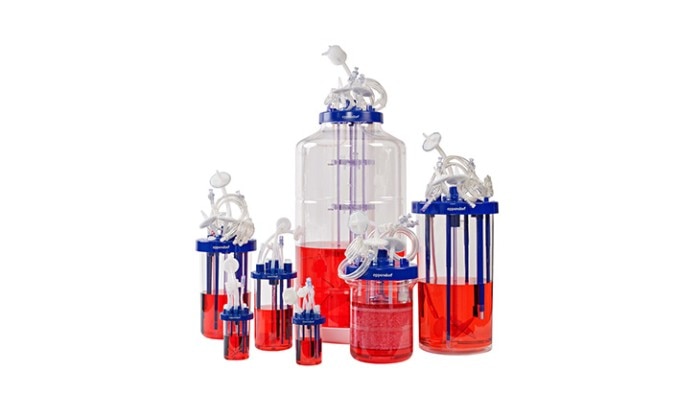
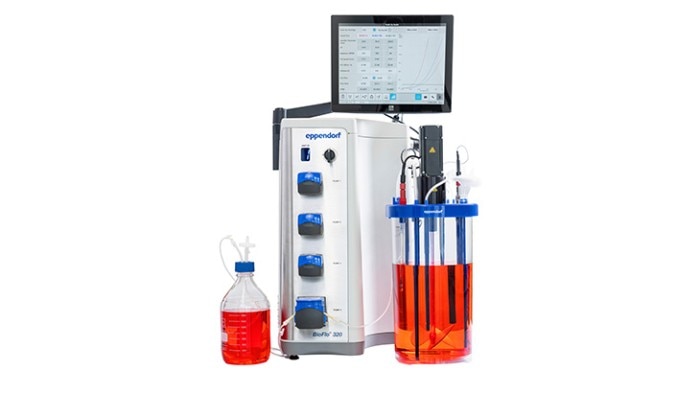
What bioprocess equipment does Eppendorf offer for stem cell manufacturing?
Lire la suite
How can I scale up stem cell culture in bioreactors?
Lire la suite
Customer case study: iPSC aggregate culture scale up
This proof-of-concept study, conducted by researchers at the A*STAR Bioprocessing Technology Institute in Singapore, demonstrates the feasibility of cultivating induced pluripotent stem cells as aggregates using bioreactors equipped with eight-blade impellers.
Summary:
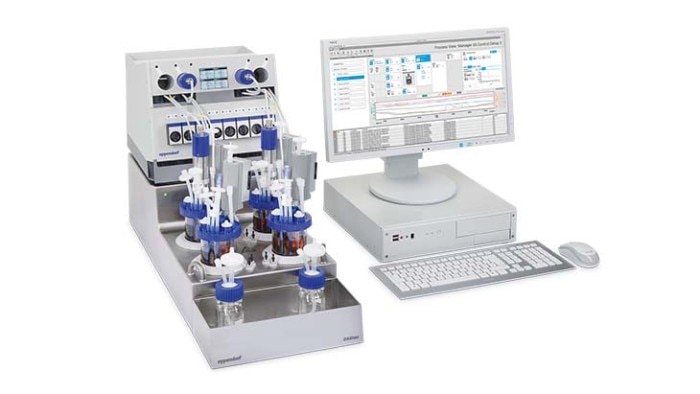
- A DASbox® Mini Bioreactor System equipped with BioBLU® 0.3sc Single-Use Bioreactors with 8-blade impellers was used to test various bioprocessing conditions for cultivating iPSC aggregates on a small scale.
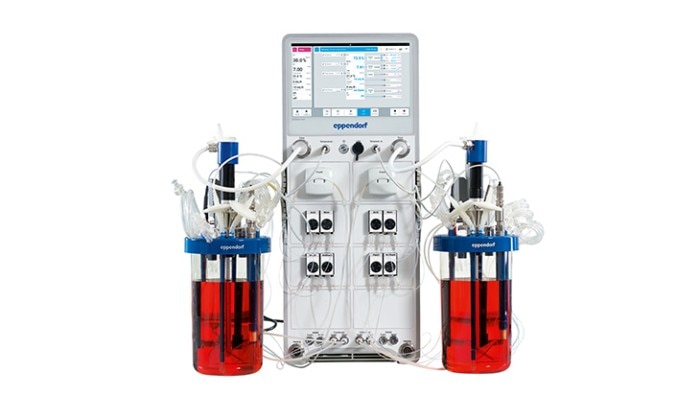
- A SciVario® twin bioreactor system with a benchtop glass bioreactor was then used to scale up the culture of iPSC cell aggregates based on constant tip speed.
- In both bioreactor systems, the cells multiplied and remained viable while retaining pluripotency markers.
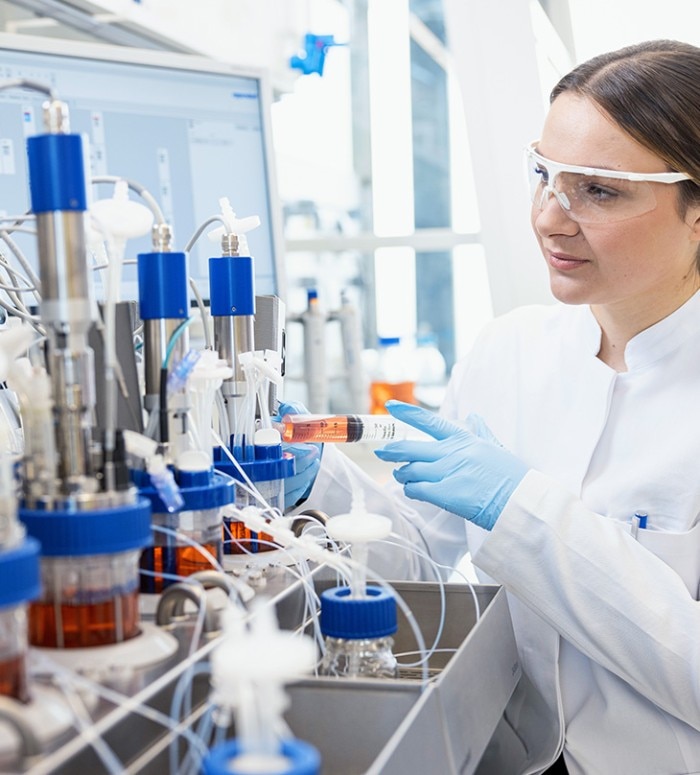
Where can I find more information about the role of stirred-tank bioreactors in stem cell manufacturing?
- Watch webinar : Join experts from Hannover Medical School, Pluri Inc., and Eppendorf and find out more about unleashing the power of stirred-tank bioreactors for cell and gene therapies!
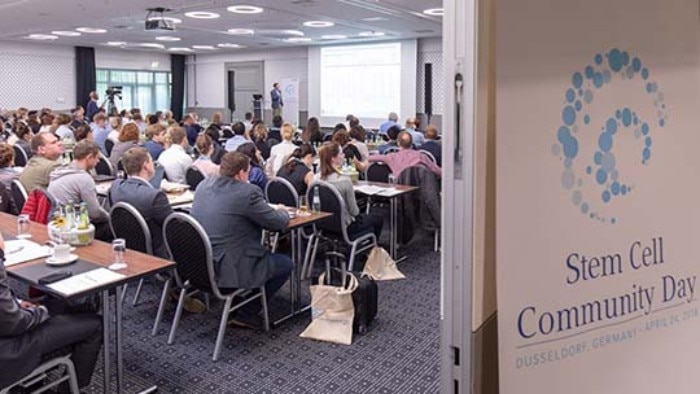
- Access the recording of scientifc talks from our last Stem Cell Community Day to get expert insights into stem cell process development, scale-up, and manufacturing.
Lire la suite
Stem cell expertise at Eppendorf
With hands-on experience in stem cell culture using bioreactors, our lab applications team has authored comprehensive application notes on stem cell bioprocessing, allowing our customers to leverage this expertise through readily accessible, practical guidance. Have a look at some of them here:
Lire la suite
Application notes on stem cell bioprocessing from the Eppendorf applications labs




Join the stem cell community!
Lire la suite